


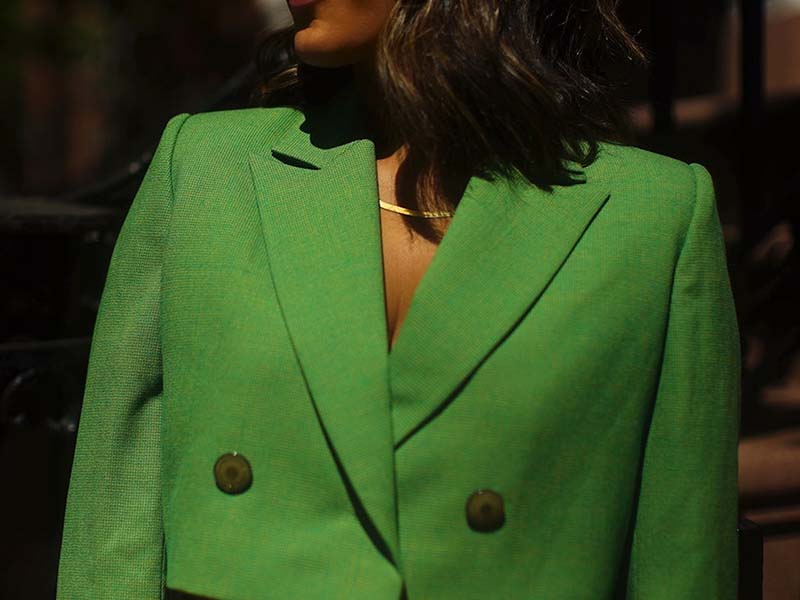


Dressing in late spring and early summer is less about choosing an outfit and more about adapting to constant change. One day feels like summer, the next feels like early spring again. The challenge isn’t just temperature it’s unpredictability and the solution is not more clothing, it’s better structure.
Here’s how to approach spring dressing in a way that actually works.
1. Build Around Layers (But Keep Them Intentional)
Layering is essential in transitional weather but the goal isn’t to pile on pieces, it’s to create combinations that still feel cohesive.
Start with a lightweight base and add one structured layer. A blazer, light jacket, or knit layer works because it can be removed easily without compromising the outfit. The key is making sure each layer feels considered on its own.
2. Choose Fabrics That Work Across Temperatures
Fabric matters more than most people realize. The right materials allow your clothing to adapt with you. Look for breathable, transitional fabrics like:
- lightweight wool
- cotton
- linen blends
These regulate temperature better than purely synthetic materials and maintain structure throughout the day.
3. Balance Comfort with Structure
Warmer days naturally push people toward looser, softer clothing. But without structure, outfits can quickly lose intention. The balance comes from pairing relaxed pieces, with something more tailored. Like s fluid dress with a blazer or a soft set with a structured outer layer. That contrast is what keeps the look polished.
4. Choose Footwear That Can Flex With the Day
Spring footwear needs to handle both cool mornings and warmer afternoons. Closed-toe shoes tend to work best. Loafers, clean sneakers, or a minimal ankle boot offer enough coverage for cooler weather while still feeling appropriate as temperatures rise.
The condition of the shoe matters just as much as the style. A clean, well-maintained footwear keeps the entire outfit elevated.
5. Work From a Capsule, Not Individual Outfits
Transitional dressing becomes much easier when your wardrobe is interchangeable. Instead of planning full outfits, focus on building a small set of pieces that work together. This allows you to adjust quickly without overthinking what to wear.
It also ensures consistency in how your wardrobe looks and feels.
6. Use Accessories Functionally, Not Just Aesthetically
Accessories in spring should do more than complete an outfit, they should solve for the weather.
A scarf can add warmth in the morning and be removed by midday. A hat can protect from sun while still feeling intentional. The goal is subtle utility.
7. Introduce Color Thoughtfully
Spring naturally invites more colorBut instead of overwhelming the outfit use color in a controlled way. Through one piece or through accessories. This keeps the look refined while still feeling seasonal while showing some of your personality.
The Bigger Picture
Spring dressing isn’t about reacting to the weather, it’s about preparing for it.
When your wardrobe is built with versatility and structure, you don’t have to think as much because everything already works together.
Explore pieces designed to move across seasons
Book a Custom Clothing Appointment.